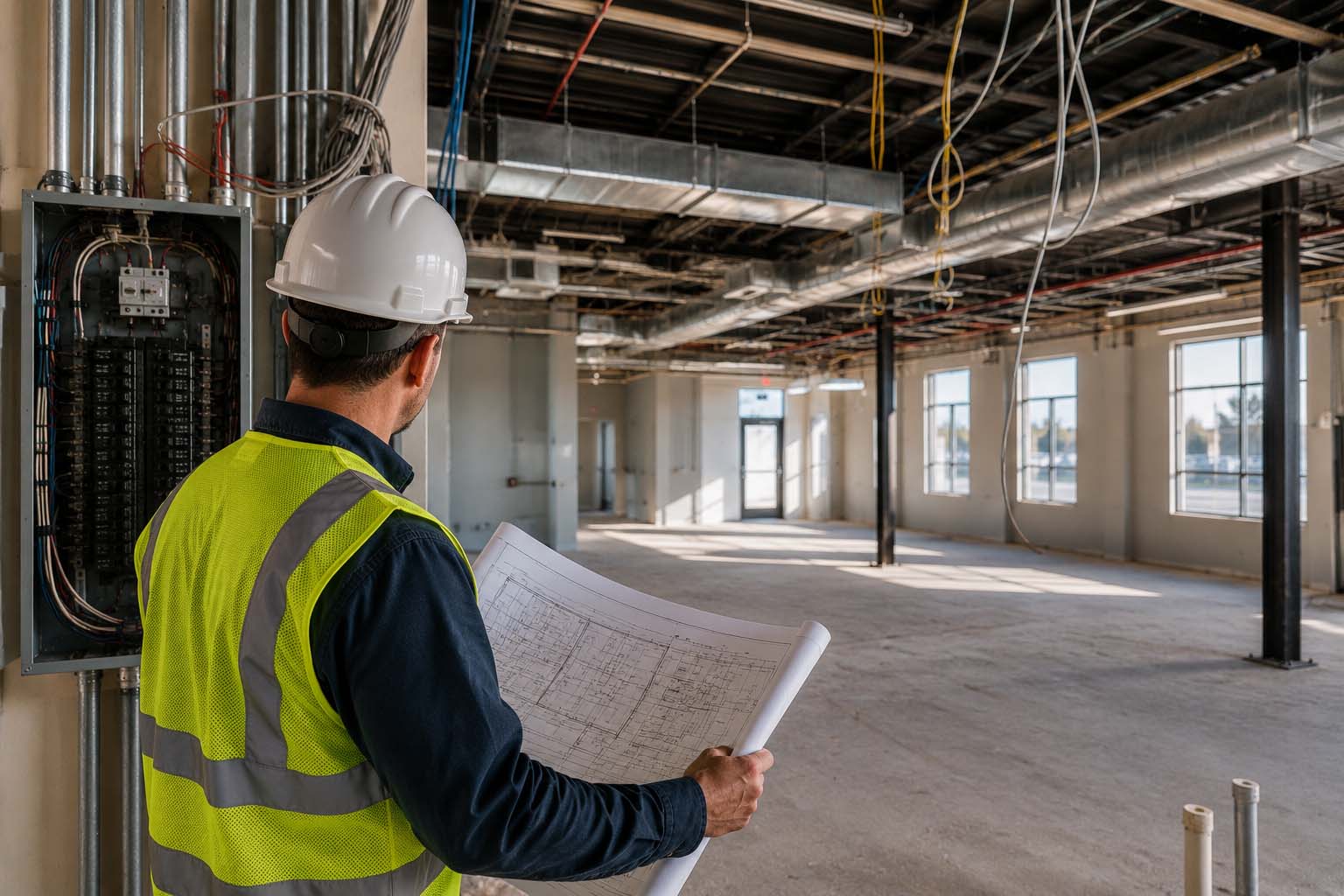
Moving into a new commercial space is exciting. You’re thinking about floor plans, signage, furniture, equipment, internet service, and when you can finally open the doors.
One thing that’s easy to overlook is whether the building’s electrical system can actually support your business.
Just because a space worked for the previous tenant doesn’t mean it will work for you.
For businesses moving or expanding in Clifton Park, evaluating the electrical infrastructure early can uncover potential problems before you’ve committed to expensive renovations or equipment installations.
With more than 25 years of commercial and industrial electrical experience, Eric Gandler helps businesses evaluate existing electrical systems and determine what may be needed for their new location.
The Previous Business May Have Used Much Less Power
Imagine moving a restaurant into a space previously occupied by a clothing store.
The building may suddenly need to support commercial refrigeration, cooking equipment, additional HVAC, exhaust systems, dishwashing equipment, and numerous dedicated circuits.
The same issue can occur when an office becomes a medical facility or a warehouse adds manufacturing equipment.
The square footage hasn’t changed.
The electrical demand has.
Start With the Electrical Service
Before making major plans for a commercial space, it’s important to understand the electrical service that’s already available.
Depending on your operation, an electrician may need to evaluate:
- Available electrical capacity
- Existing panels
- Three-phase power availability
- Service size
- Transformers
- Existing circuits
- Equipment requirements
- Condition of electrical components
This provides a much clearer picture of what the property can support.
Make a List of the Equipment You’re Bringing
One of the best things a business owner can do is create a list of major electrical equipment before planning the new space.
That might include:
- Commercial kitchen equipment
- Refrigerators and freezers
- Manufacturing machinery
- Compressors
- HVAC equipment
- Servers and computer equipment
- Specialized office equipment
- Warehouse equipment
- EV chargers
The electrical requirements for this equipment can then be compared with what’s available in the building.
Don’t Assume an Outlet Means You’re Ready
Finding an outlet in approximately the right location doesn’t necessarily mean you can plug in the equipment and start working.
Commercial equipment may require specific voltage, amperage, phases, circuit protection, disconnects, or dedicated circuits.
Sometimes an existing connection can be used.
Other times, new electrical infrastructure is required.
Finding that out before equipment arrives can save considerable time and frustration.
Look at the Electrical Panels
Commercial spaces that have been occupied by several different businesses can accumulate years of electrical changes.
Panels may contain circuits from previous tenants, incomplete labeling, abandoned equipment, or very little room for expansion.
An electrical evaluation can help determine what’s actually there and how much flexibility you have for the new business.
Consider Your Future Plans Too
It’s easy to design a space around what your business needs on opening day.
But what happens two years later?
Maybe you expect to add another production machine, expand the kitchen, increase refrigeration, add more employees, install EV chargers, or expand into an adjacent space.
If growth is already part of the plan, it makes sense to consider those future electrical requirements now.
A little additional planning today may help avoid another major electrical project later.
Find Problems Before Construction Begins
Electrical surprises become considerably more expensive once renovations are underway.
Walls may already be closed. Equipment may have been ordered. Contractors may be scheduled. An opening date may already have been announced.
Discovering at that point that the building needs a significant electrical upgrade can affect both the budget and the schedule.
Evaluating electrical requirements earlier gives business owners and contractors better information when planning the project.
Coordinate Electrical Work With the Rest of the Renovation
Commercial electrical work rarely happens in isolation.
Electrical requirements often need to be coordinated with:
- HVAC contractors
- Equipment installers
- General contractors
- Plumbers
- Kitchen designers
- IT providers
Bringing an experienced commercial electrician into the planning process early can help make sure electrical requirements aren’t discovered after other decisions have already been made.
A Better Space Starts With Better Planning
A commercial property can look perfect and still be wrong for your electrical needs.
Before signing a lease, purchasing major equipment, or beginning a renovation, understanding the building’s electrical infrastructure can help you make better decisions.
It may confirm that the property is ready to go.
Or it may reveal upgrades that should become part of your budget and timeline.
Either way, it’s better to know before opening day.
Eric Gandler – Commercial Electrician in Clifton Park
If you’re moving, expanding, or considering a new commercial location, Eric Gandler Development Electric can help evaluate the electrical system before your business moves in.
With more than 25 years of experience, Eric Gandler provides commercial and industrial electrical services throughout Clifton Park and the Capital Region, including electrical evaluations, panel and service upgrades, power distribution, equipment connections, tenant fit-ups, renovations, and new construction.
Planning a move or commercial renovation? Call Eric Gandler Clifton Park Development Electric at 518-365-1583 to discuss the electrical requirements for your new space.