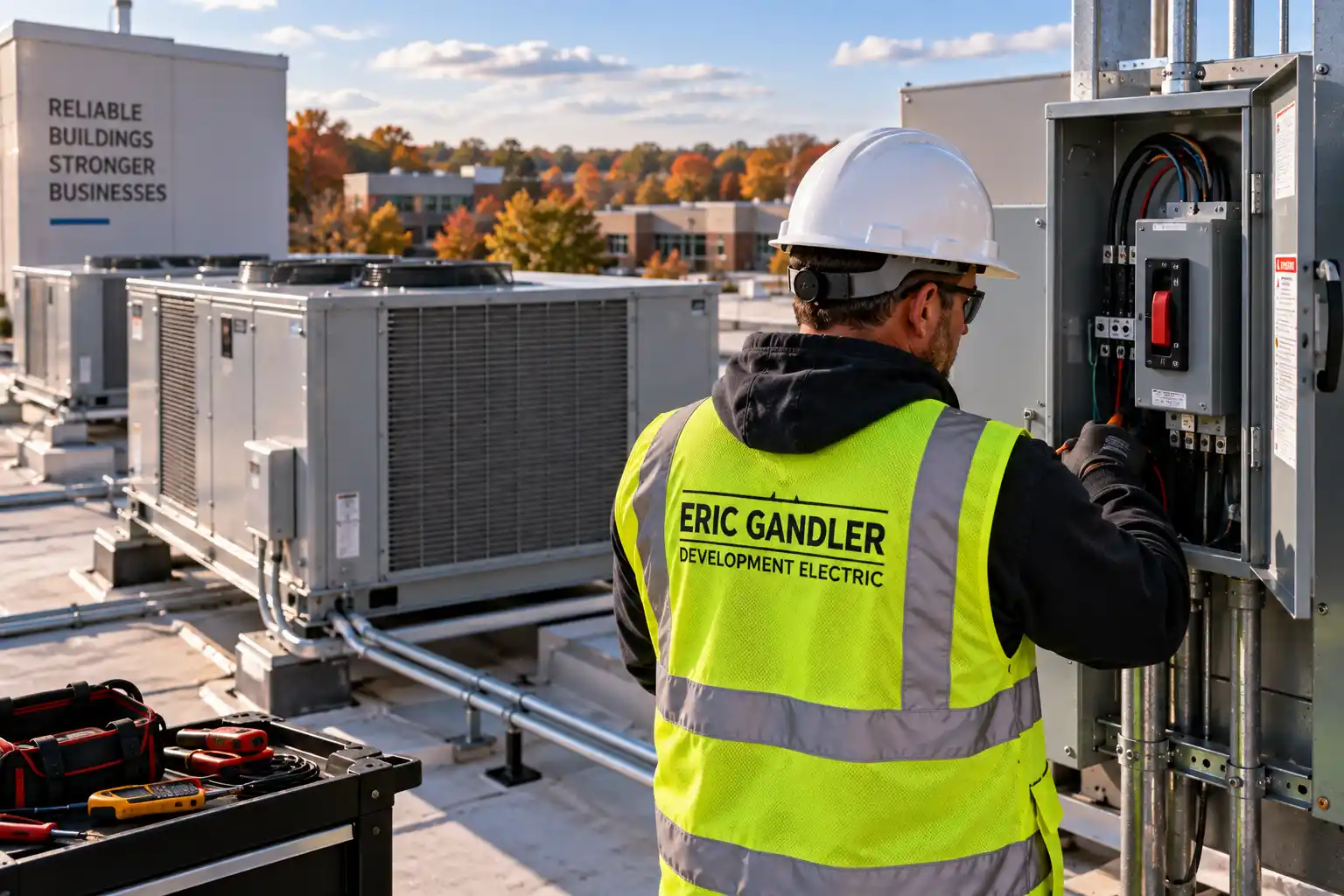
Heating and cooling systems are among the largest electrical loads in many commercial buildings. When a business replaces an aging HVAC unit, adds another system, or expands its climate-controlled space, the electrical requirements shouldn’t be an afterthought.
For businesses searching for Eric Gandler Clifton Park commercial electrical services, Development Electric can help determine whether an existing electrical system has the capacity and infrastructure necessary to support new HVAC equipment.
Planning the electrical side of an HVAC project early can help prevent delays, unexpected costs, and problems once installation begins.
New HVAC Equipment May Have Different Electrical Requirements
Replacing an old rooftop unit doesn’t necessarily mean the new equipment can simply be connected to the existing electrical circuit.
Equipment specifications can change considerably from one system to another.
A new commercial HVAC system may have different requirements for:
- Voltage
- Amperage
- Circuit protection
- Disconnects
- Wiring
- Three-phase power
- Electrical capacity
That’s why the electrical specifications should be reviewed before installation.
Can Your Existing Electrical System Handle the Additional Load?
This becomes even more important when a business is adding HVAC equipment rather than simply replacing it.
Maybe you’re converting warehouse space into offices. Perhaps you’re expanding a restaurant, finishing previously unused space, or adding climate control to a production area.
The new HVAC equipment represents an additional electrical load that the building didn’t previously have.
An electrician can evaluate the existing service, panels, circuits, and electrical demand to determine whether sufficient capacity is available.
HVAC Contractors and Electricians Need to Work Together
A commercial HVAC installation often involves coordination between multiple trades.
The HVAC contractor determines what heating and cooling equipment is appropriate for the building. The electrician makes sure the necessary electrical infrastructure is available to power it.
Bringing both sides into the project early can prevent situations where equipment arrives only to discover that electrical modifications are required before installation can be completed.
Don’t Forget Rooftop Electrical Equipment
Many commercial HVAC systems are located on the roof.
That means the electrical installation may involve exterior disconnects, conduit, wiring, controls, and other components exposed to weather throughout the year.
In Clifton Park, those components experience summer heat, rain, snow, ice, and freezing temperatures.
Visible deterioration, damaged equipment, or water intrusion around exterior electrical components shouldn’t be ignored.
Repeated Breaker Trips Aren’t Normal
If an HVAC system repeatedly trips a breaker, resetting it over and over isn’t a repair.
The problem could involve the HVAC equipment, electrical circuit, breaker, wiring, or another part of the system.
A commercial electrician can help determine whether the electrical supply is contributing to the problem.
Repeated breaker trips are a warning sign worth investigating, particularly when they involve equipment as important as a building’s heating or cooling system.
Consider the Rest of the Building’s Electrical Demand
HVAC equipment doesn’t operate in isolation.
A commercial electrical system may simultaneously be powering lighting, computers, refrigeration, machinery, kitchen equipment, servers, and numerous other loads.
When major new equipment is added, it’s important to consider the building’s overall electrical demand, not simply whether there is an empty breaker position available.
Physical space in a panel doesn’t automatically mean sufficient electrical capacity exists.
Plan for Future Expansion
If your business is already making significant electrical changes for an HVAC project, consider what else may be coming.
Are you planning an expansion?
Will additional machinery be installed?
Could another HVAC system be needed later?
Are you adding EV chargers or other high-demand equipment?
Discussing future plans can help determine whether it makes sense to accommodate additional electrical capacity as part of the current project.
Fall Is a Good Time to Evaluate Commercial HVAC Power
In Clifton Park, September and early fall provide a natural opportunity to think about heating equipment before colder weather arrives.
If your business experienced electrical problems with its heating system last winter—or you’re installing new equipment before this winter—addressing electrical requirements now can help avoid problems when temperatures drop.
Preventative electrical maintenance can also identify aging components, loose connections, or other electrical issues before heating equipment begins operating more heavily.
Eric Gandler Clifton Park Commercial Electrical Services
HVAC upgrades aren’t only mechanical projects. They can also be significant electrical projects.
If you’re searching for Eric Gandler Clifton Park commercial electrical services, Development Electric can evaluate your existing infrastructure, review the requirements of new HVAC equipment, and complete the electrical work necessary to support it.
With more than 25 years of commercial and industrial electrical experience, Eric Gandler provides electrical troubleshooting, dedicated circuits, panel and service upgrades, power distribution, equipment connections, preventative maintenance, and other commercial electrical services throughout Clifton Park and the Capital Region.
Planning a commercial HVAC replacement or expansion? Call Eric Gandler Development Electric.