Eric Gandler Clifton Park: What Happens to Commercial Electrical Systems When Power Is Restored After an Outage?
When a commercial building loses electricity, the immediate concern is usually getting operations back to normal. Lights go out, computers shut down, HVAC systems stop running, and equipment may suddenly lose power.
But what happens when electricity comes back on?
Restoring power after an outage can create challenges for commercial electrical systems, particularly in buildings with large motors, refrigeration equipment, industrial machinery, and sensitive electronics.
For businesses searching for Eric Gandler Clifton Park commercial electrical services, Development Electric provides electrical troubleshooting, inspections, maintenance, and system upgrades throughout Clifton Park and the Capital Region.
Understanding what happens during power restoration can help business owners protect equipment and reduce unexpected interruptions.
Why Power Restoration Can Stress Electrical Equipment
When electricity returns after an outage, numerous electrical devices may attempt to restart at approximately the same time.
Depending on the equipment, this can create a temporary increase in electrical demand.
Large motors, compressors, and certain other electrical loads may draw substantially more current during startup than during normal operation.
In a commercial building with multiple pieces of equipment, simultaneous restarting can place additional demands on the electrical distribution system.
Properly designed electrical systems account for these operating conditions, but aging equipment or existing electrical problems may become more noticeable during power restoration.
What Is Electrical Inrush Current?
Inrush current is the temporary increase in electrical current that some equipment draws when first energized.
For example, electric motors commonly require additional current to begin turning before settling into their normal operating conditions.
Transformers can also experience magnetizing inrush when energized.
This behavior is normal, but the amount and duration of inrush current vary depending on the equipment.
In facilities with numerous motors or large electrical loads, startup requirements should be considered when evaluating electrical capacity and protective devices.
Which Commercial Businesses Are Most Affected?
Businesses that depend on electrically powered equipment may face additional challenges following an outage.
Examples include:
- Restaurants: Refrigeration, freezers, ventilation, and kitchen equipment
- Warehouses: Conveyors, loading equipment, and automated systems
- Manufacturing facilities: Production machinery, motors, and industrial controls
- Office buildings: Computers, servers, networking equipment, and HVAC
- Retail properties: Lighting, refrigeration, electronic systems, and climate control
- Commercial buildings: Pumps, elevators, ventilation, and building management systems
The potential impact depends on the facility’s electrical infrastructure and how its equipment responds when power returns.
Why Some Equipment Doesn’t Restart Automatically
Not all commercial equipment is designed to resume operation immediately after an outage.
Some machinery includes protective controls that require a manual restart.
Other systems may incorporate time delays to prevent multiple motors or compressors from starting simultaneously.
These features can help protect equipment and support safer operation.
However, when equipment fails to restart as expected, business owners should avoid repeatedly resetting breakers or bypassing protective controls.
Professional troubleshooting may be necessary to determine the cause.
Power Surges and Voltage Fluctuations
Power outages and restoration events can sometimes be accompanied by voltage disturbances or switching transients.
These conditions may affect sensitive electronic equipment, depending on the electrical system and the characteristics of the disturbance.
Computers, networking equipment, electronic controls, and other devices may benefit from appropriately selected surge protection.
However, surge protection devices do not prevent every type of electrical disturbance or guarantee that equipment will remain operational during an outage.
For facilities with critical electronics, additional power-quality protection may be appropriate.
Why Repeated Outages Deserve Attention
An occasional power outage doesn’t necessarily indicate a problem with a building’s electrical system.
However, frequent interruptions can create operational challenges.
Repeated shutdowns and restarts may affect equipment performance, interrupt production, and create additional maintenance requirements.
If electrical problems continue after utility power has been restored, the building’s electrical distribution system may need professional evaluation.
It’s important to distinguish between utility-related interruptions and problems originating within the facility.
Can Electrical Systems Be Designed for Better Power Restoration?
Yes. Depending on the facility, electrical improvements may help equipment restart more reliably after interruptions.
Potential considerations include:
- Sequenced equipment startup
- Appropriate motor controls
- Surge protection
- Uninterruptible power supplies
- Backup power systems
- Electrical distribution improvements
- Equipment-specific restart controls
- Properly coordinated protective devices
Not every commercial property requires these solutions.
The appropriate approach depends on the equipment, operational requirements, and existing electrical infrastructure.
Backup Generators Require Proper Planning
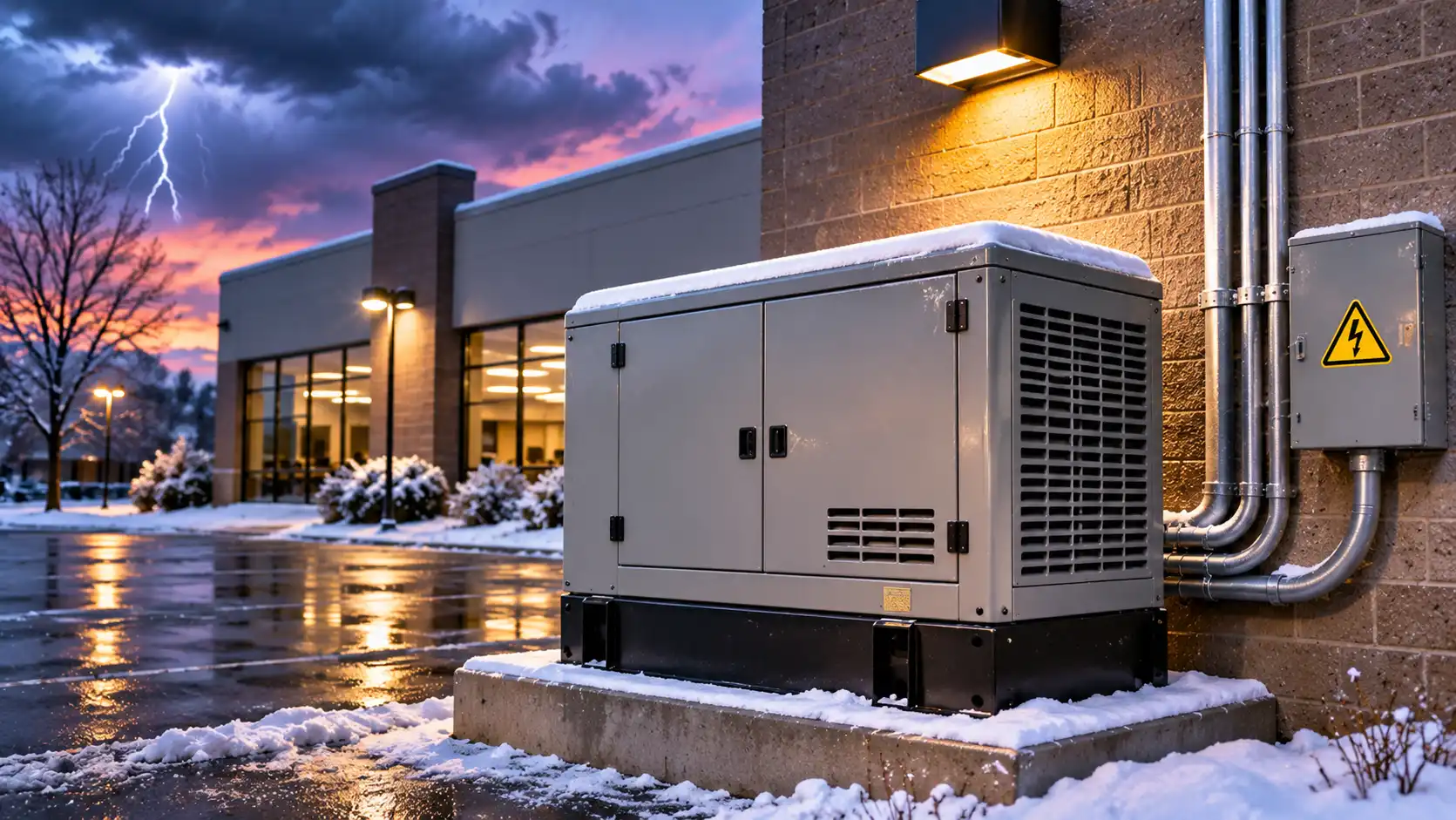
Some businesses use standby generators to maintain essential operations during utility outages.
Generators can provide valuable backup power, but they must be appropriately sized for the electrical loads they are intended to support.
Motor starting requirements, equipment priorities, and transfer equipment all influence system design.
For commercial facilities with large motors or industrial machinery, generator sizing may require more detailed evaluation than simply adding up equipment nameplate ratings.
Professional electrical planning helps determine which loads can be supported and how they should be managed.
What Should Business Owners Check After an Outage?
Once utility power has been restored, facility managers should verify that essential systems are operating normally.
Important considerations include:
- Confirming HVAC equipment has restarted
- Checking refrigeration and freezer operation
- Verifying essential lighting
- Reviewing equipment fault indicators
- Confirming networking and communication systems
- Checking that critical machinery is operating normally
- Watching for unusual electrical behavior
If equipment repeatedly trips breakers, produces unusual odors, or shows signs of electrical damage, stop using the affected equipment and arrange professional service.
Employees should not open electrical panels or attempt repairs to energized equipment.
Preventative Maintenance Helps Businesses Prepare
Although electrical maintenance cannot prevent utility outages, it can help identify conditions that may affect equipment reliability.
Commercial electrical inspections may reveal deteriorated connections, aging distribution equipment, damaged components, or other concerns that deserve attention.
For businesses that rely heavily on electrical equipment, preventative maintenance and outage planning can work together to reduce avoidable disruptions.
Eric Gandler Clifton Park Commercial Electrical Services
Power outages can interrupt business operations, but restoring electricity is only part of getting a commercial facility back to normal.
Understanding equipment startup requirements, electrical capacity, and power distribution can help businesses prepare for interruptions and identify potential improvements.
Businesses searching for Eric Gandler Clifton Park commercial electrical services can turn to Development Electric for more than 25 years of commercial and industrial electrical experience.
Eric Gandler Development Electric provides commercial electrical troubleshooting, inspections, preventative maintenance, equipment connections, panel and service upgrades, power distribution, and electrical system improvements throughout Clifton Park and the Capital Region.
Whether your business is experiencing electrical problems after power outages, adding equipment, or planning improvements to its electrical infrastructure, professional evaluation can help determine the appropriate next steps.
Need commercial electrical service in Clifton Park? Call Eric Gandler Development Electric at 518-365-1583 to discuss your facility’s electrical needs.