Eric Gandler Clifton Park: How Commercial Electrical Inspections Help Prioritize Building Maintenance
Commercial property managers have a long list of maintenance responsibilities. HVAC systems, plumbing, roofing, lighting, machinery, and building infrastructure all require attention.
But when it comes to electrical maintenance, one of the biggest challenges is knowing which problems need attention first.
Not every electrical issue is immediately obvious, and not every problem presents the same level of urgency.
For businesses searching for Eric Gandler Clifton Park commercial electrical services, Development Electric provides experienced electrical troubleshooting, inspections, preventative maintenance, and system upgrades throughout Clifton Park and the Capital Region.
A structured electrical inspection can help facility managers make informed decisions about maintenance priorities.
Why Electrical Maintenance Shouldn’t Be Based on Guesswork
Many businesses take a reactive approach to electrical maintenance.
When something stops working, they call an electrician. When a breaker trips repeatedly, they investigate. When equipment fails, they arrange repairs.
While unexpected problems will always occur, relying exclusively on reactive maintenance can create unnecessary interruptions.
Routine electrical inspections provide an opportunity to evaluate equipment condition before a failure occurs.
They can also help determine which repairs deserve immediate attention and which improvements can be planned for the future.
Not Every Electrical Problem Has the Same Priority
Consider a commercial building with several electrical concerns.
One panel has visible signs of overheating. Another has outdated circuit labels. A third is approaching its capacity limits as the business expands.
All three conditions may deserve attention, but they don’t necessarily require the same response.
A professional electrical evaluation can help identify safety concerns, equipment reliability issues, and opportunities for future improvements.
This information allows property managers to prioritize work based on actual conditions rather than assumptions.
What Can a Commercial Electrical Inspection Identify?
The scope of an electrical inspection depends on the building, equipment, and specific concerns being evaluated.
Common areas of attention may include:
- Electrical panels and distribution equipment
- Circuit breakers and disconnects
- Signs of overheating or deterioration
- Damaged electrical enclosures
- Evidence of moisture intrusion
- Electrical connections
- Equipment loading
- Grounding and bonding concerns
- Electrical accessibility and clearances
- Outdated or missing circuit identification
Some conditions can be identified through visual examination, while others require specialized testing performed by qualified personnel.
Thermal Imaging Can Provide Additional Information
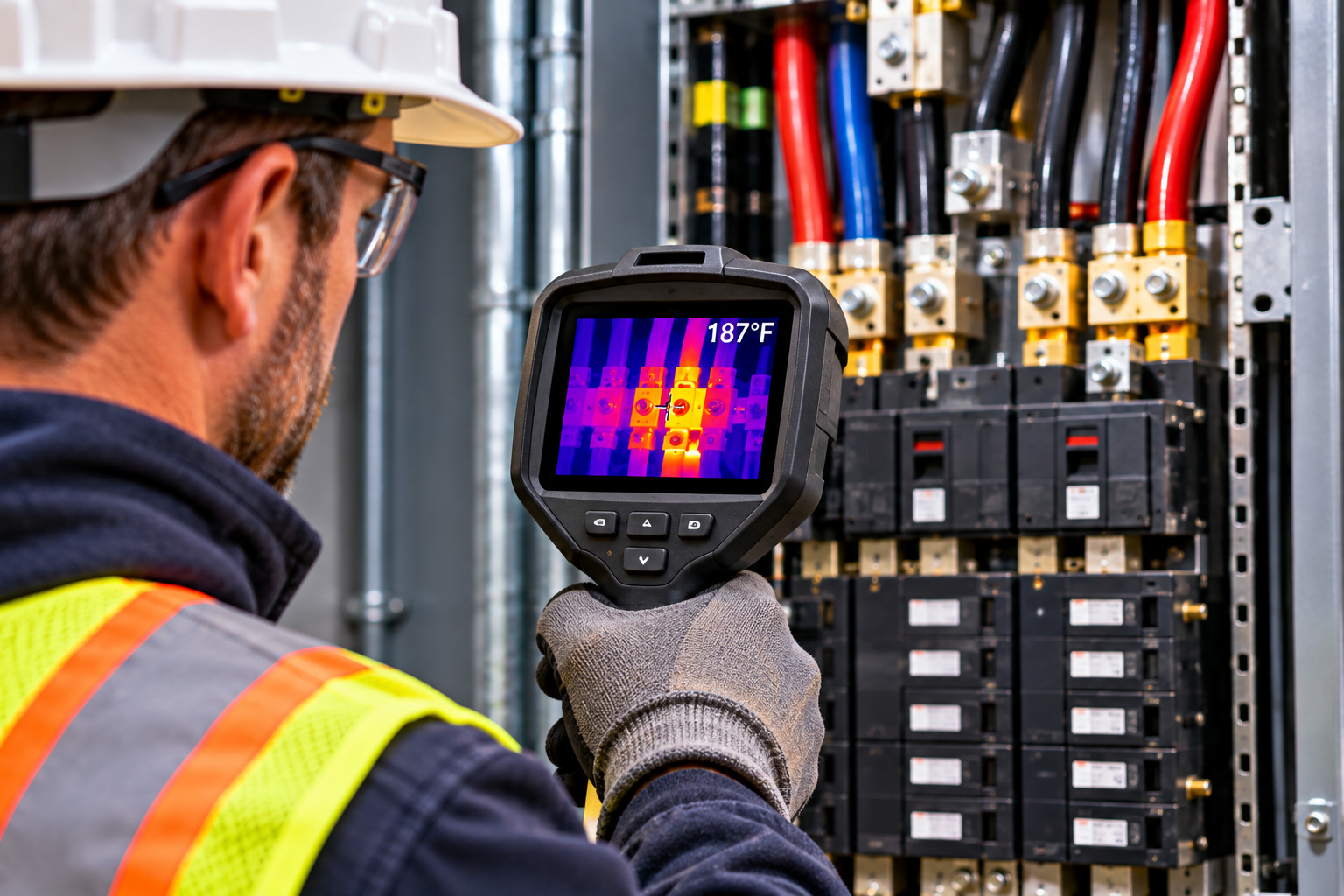
Infrared thermal imaging is one tool that may be used during certain electrical inspections.
Thermal cameras detect temperature differences across equipment surfaces.
Under appropriate conditions, unusual temperature patterns can help identify components that deserve further investigation.
For example, an electrical connection operating at a significantly higher temperature than comparable connections may indicate a potential problem.
However, temperature differences don’t automatically establish that a component is defective. Electrical loading, environmental conditions, and equipment design must also be considered.
Thermal imaging is most useful when combined with professional electrical knowledge and appropriate follow-up testing.
Inspection Findings Can Help Create a Maintenance Plan
One advantage of a structured inspection is that the results can help guide future maintenance decisions.
Rather than treating every recommendation as an emergency, facility managers can work with qualified electrical professionals to identify appropriate next steps.
These may include:
Immediate attention: Conditions presenting serious electrical safety concerns or a significant risk of equipment failure.
Scheduled repairs: Deficiencies that require correction but can be addressed through properly planned maintenance.
Future improvements: Upgrades that support expansion, capacity, efficiency, or long-term equipment reliability.
The urgency of any condition should be determined by a qualified professional based on the actual hazard and operating circumstances.
Electrical Documentation Makes Future Maintenance Easier
Commercial buildings often undergo years of modifications.
New equipment is installed, circuits are added, panels are replaced, and tenant spaces are renovated.
Unfortunately, electrical documentation doesn’t always keep pace with those changes.
Updated panel directories, equipment identification, and maintenance records can make future troubleshooting and planning easier.
For property managers overseeing multiple buildings, organized electrical records can also help track recurring issues and planned improvements.
Consider the Cost of Unexpected Downtime
Electrical maintenance decisions aren’t only about the cost of repairs.
For many commercial businesses, an unexpected power interruption can affect employees, customers, equipment, and daily operations.
A warehouse may lose access to essential machinery. A restaurant may experience refrigeration problems. An office may lose network connectivity.
While inspections cannot prevent every failure, identifying developing problems can create opportunities to schedule repairs before equipment stops working unexpectedly.
Older Commercial Buildings Deserve Particular Attention
Clifton Park and the surrounding Capital Region contain commercial properties of many different ages.
Some older buildings have been renovated repeatedly, with electrical systems modified to accommodate new tenants and changing business requirements.
Over time, electrical demand may increase substantially.
A professional evaluation can help determine whether existing infrastructure remains appropriate for the building’s current use.
This is especially important when planning renovations, adding machinery, or expanding operations.
Make Electrical Inspections Part of Your Maintenance Calendar
Commercial property managers routinely schedule HVAC maintenance, roof inspections, and other preventative services.
Electrical systems deserve similar consideration.
The appropriate inspection frequency depends on equipment condition, operating environment, manufacturer recommendations, applicable requirements, and the importance of the equipment to business operations.
A qualified electrical professional can help determine what maintenance activities make sense for a particular facility.
Eric Gandler Clifton Park Commercial Electrical Services
Effective electrical maintenance starts with understanding the condition of your building’s electrical infrastructure.
For businesses searching for Eric Gandler Clifton Park, Development Electric offers more than 25 years of commercial and industrial electrical experience.
Eric Gandler Development Electric provides commercial electrical troubleshooting, inspections, preventative maintenance, panel and service upgrades, power distribution, equipment connections, and electrical improvements throughout Clifton Park and the Capital Region.
Whether you manage an office building, warehouse, retail property, or industrial facility, identifying electrical concerns and planning appropriate improvements can help support safer, more reliable operations.
Need help evaluating your commercial electrical system? Call Eric Gandler Development Electric to discuss your property’s electrical maintenance needs.