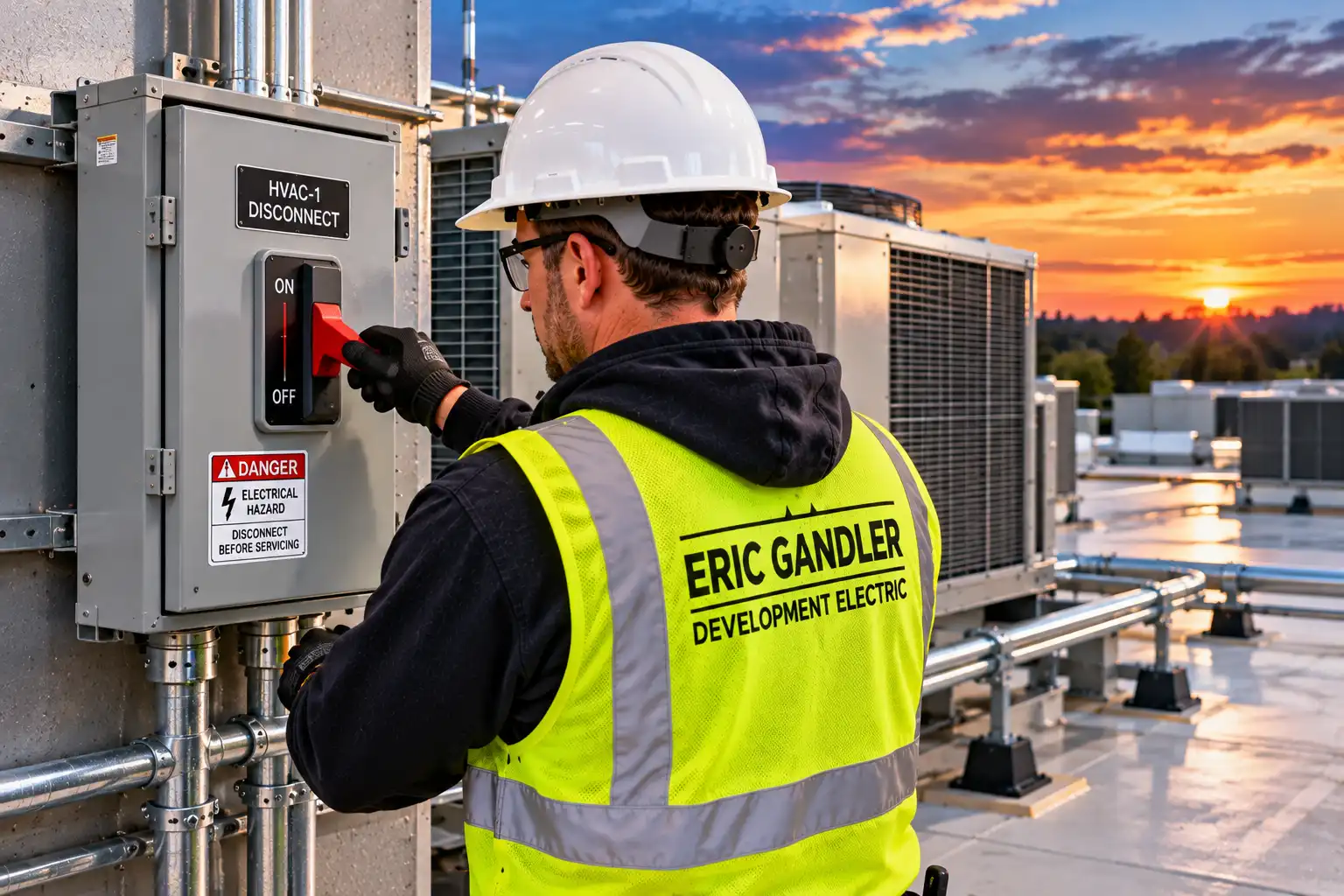
Every commercial building contains electrical equipment that occasionally needs maintenance, repairs, or replacement. From HVAC systems and industrial machinery to commercial kitchen equipment and motors, safely controlling the electrical supply is an important part of servicing these systems.
One component that often gets overlooked is the electrical disconnect switch.
For businesses searching for Eric Gandler Clifton Park commercial electrical services, Development Electric provides experienced electrical installations, troubleshooting, maintenance, and upgrades throughout Clifton Park and the Capital Region.
Understanding the purpose of electrical disconnects can help business owners and facility managers better recognize their importance.
What Is an Electrical Disconnect Switch?
An electrical disconnect is a device used to isolate equipment or portions of an electrical system from their power source.
Depending on the installation, a disconnect may be a separate switch, a circuit breaker, or another approved device.
Disconnects allow qualified personnel to isolate equipment before performing electrical maintenance or repairs.
They’re commonly found near:
- Commercial HVAC units
- Industrial machinery
- Motors and pumps
- Commercial kitchen equipment
- Electrical distribution equipment
- Manufacturing equipment
- Rooftop mechanical systems
- Other commercial electrical installations
Different equipment and installations have different disconnect requirements.
Why Are Disconnects Important?
Imagine a commercial rooftop HVAC unit needs servicing.
The technician must be able to safely isolate the equipment from its electrical supply before beginning work.
A properly installed disconnect provides a means of isolating the equipment, subject to the applicable electrical safety procedures.
This is particularly important in large commercial buildings where the main electrical panel may be located far from the equipment being serviced.
Disconnect switches help support safer maintenance practices and reduce the risk of unexpected energization when used as part of appropriate lockout/tagout procedures.
Not Every Disconnect Works the Same Way
Commercial electrical disconnects come in different configurations.
Some are simple switches designed to open or close an electrical circuit. Others include fuses that provide overcurrent protection.
Certain installations require specific ratings, locations, accessibility, or other characteristics.
Choosing the correct disconnect depends on factors such as:
- Equipment voltage
- Electrical current
- Equipment specifications
- Available fault current
- Environmental conditions
- Applicable electrical codes
- Manufacturer requirements
This is why commercial disconnect installations should be designed and completed by qualified electrical professionals.
Outdoor Disconnects Face Additional Challenges
Many commercial disconnects are installed outside, particularly those serving rooftop HVAC equipment, refrigeration systems, and other exterior machinery.
In Clifton Park, outdoor electrical equipment is exposed to rain, snow, ice, freezing temperatures, and summer heat.
Over time, environmental exposure can contribute to deterioration.
Potential concerns include damaged enclosures, corrosion, moisture intrusion, and mechanical problems that interfere with proper operation.
If an outdoor disconnect appears damaged, it should be professionally evaluated.
Accessibility Matters
A disconnect isn’t particularly useful if qualified personnel can’t reach it when needed.
Commercial renovations, equipment additions, and storage changes can sometimes interfere with access to electrical equipment.
Facility managers should make sure disconnects remain accessible as required and aren’t blocked by stored materials or building modifications.
Electrical identification is important too.
In larger facilities, clear labeling helps personnel determine which disconnect serves a particular piece of equipment.
Equipment Replacement May Require Electrical Changes
When businesses replace older machinery or HVAC equipment, the existing disconnect may not always be appropriate for the replacement.
New equipment can have different voltage, current, or overcurrent protection requirements.
Before installation, an electrician should review the equipment specifications and evaluate the existing electrical connection.
Sometimes the existing disconnect can remain in place. Other installations may require a replacement or modification.
Determining this before the new equipment arrives can help avoid installation delays.
Disconnects and Lockout/Tagout Procedures
For commercial and industrial facilities, controlling hazardous energy is a critical part of equipment maintenance.
Lockout/tagout procedures are intended to prevent equipment from unexpectedly starting or becoming energized while maintenance or servicing is performed.
Electrical disconnects can serve as energy-isolating devices when suitable for the application.
However, simply turning off a switch doesn’t automatically establish a safe working condition.
Qualified personnel must follow applicable procedures, including properly isolating energy sources and verifying the absence of voltage when required.
When Should Electrical Disconnects Be Inspected?
A commercial electrical evaluation may be appropriate when:
- Disconnect enclosures show visible damage
- Equipment has been replaced or upgraded
- Disconnects are difficult to access
- Labels are missing or unclear
- Water intrusion or corrosion is suspected
- Electrical equipment is behaving abnormally
- A building has undergone multiple renovations
- Preventative electrical maintenance is being scheduled
Business owners shouldn’t open disconnect enclosures or attempt internal electrical repairs themselves.
Preventative Maintenance Helps Keep Electrical Equipment Reliable
Disconnect switches are only one part of a commercial building’s electrical infrastructure.
Panels, breakers, transformers, wiring, equipment connections, and other components also require attention over time.
A preventative electrical maintenance program can help identify developing problems before they contribute to equipment failures or unexpected downtime.
For businesses that depend on machinery, refrigeration, HVAC, or other essential equipment, that can be an important part of facility management.
Eric Gandler Clifton Park Commercial Electrical Services
Electrical disconnects may seem like small components compared with the equipment they serve, but they play an important role in commercial electrical safety and maintenance.
Businesses searching for Eric Gandler Clifton Park commercial electrical services can turn to Development Electric for more than 25 years of commercial and industrial electrical experience.
Eric Gandler Development Electric provides electrical troubleshooting, equipment connections, disconnect installations and replacements, panel and service upgrades, power distribution, preventative maintenance, and other commercial electrical services throughout Clifton Park and the Capital Region.
Whether you’re replacing commercial equipment, renovating a facility, or addressing an electrical concern, having the right electrical infrastructure in place is essential.
Need commercial electrical work in Clifton Park? Call Eric Gandler Development Electric.